

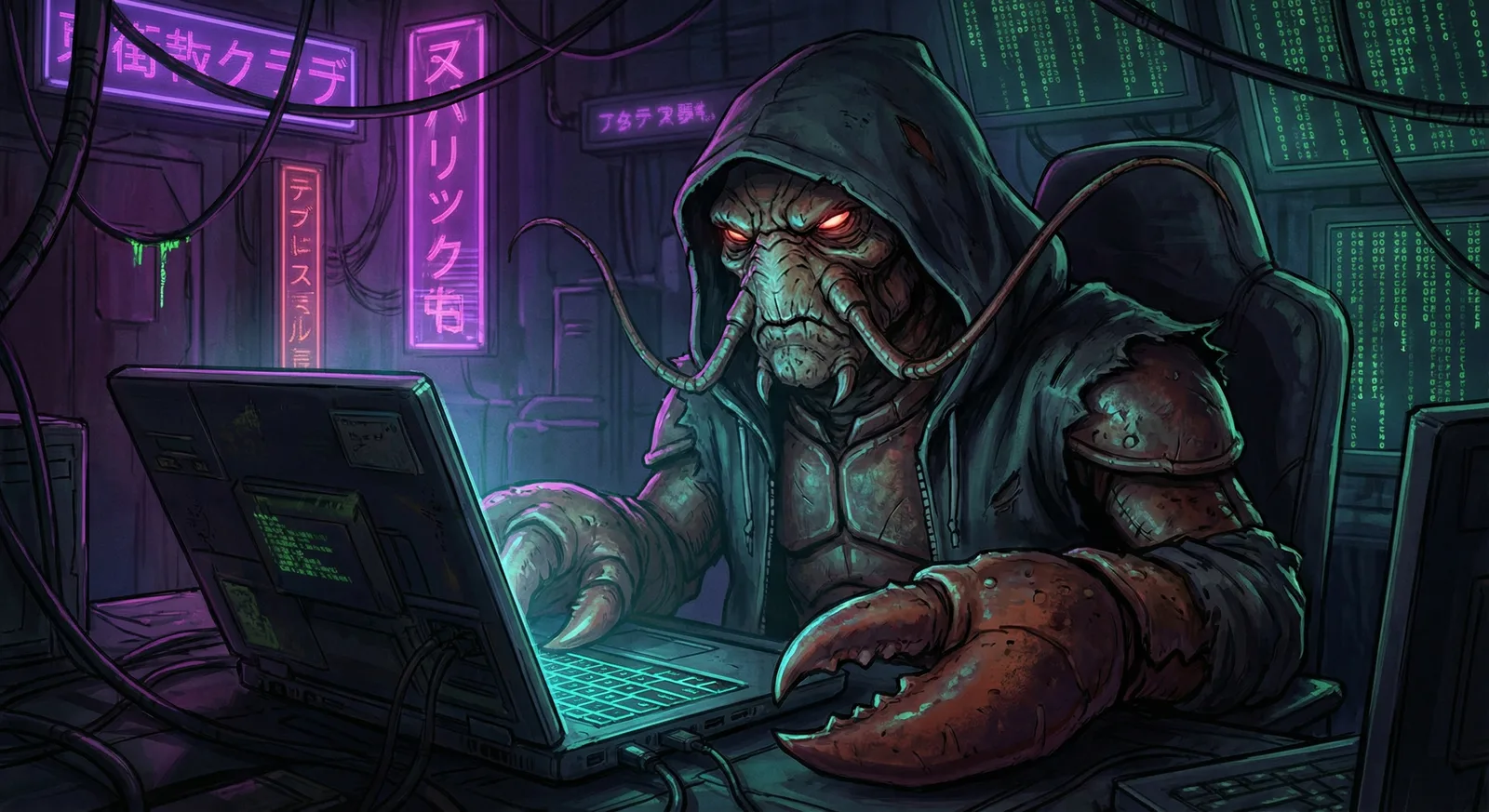
Robert Herjavec recently made waves with a pointed observation about the evolving cybersecurity landscape. Platforms like Moltbot (formerly Clawdbot, now also known as OpenClaw) aren’t just tools anymore—they’re signals. We’re moving into a future where AI doesn’t just follow orders. It can interact, coordinate, and make decisions across systems without a human in the loop at all.
“If you’re leading a business today, and you don’t actually know what’s connected to your network, you don’t really know your risk,” Herjavec noted. “Cyber threats are no longer about one machine. They’re about ecosystems.”
He’s right. And for those of us running agentic AI platforms, this isn’t abstract futurism—it’s today’s operational reality. The same capabilities that make Clawdbot incredibly useful (persistent memory, full computer access, proactive behavior) also create an expanded attack surface that traditional security models weren’t designed to handle.
In this post, we’ll break down the 10 most critical security threats facing Clawdbot deployments and the architectural mitigations that actually work. This isn’t FUD—it’s the stuff you need to know before connecting an AI agent to your production infrastructure.
The Threat Landscape: 10 Ways Your Agent Can Be Compromised
1. SSH Brute Force Attacks
The Attack: Automated bots scan for fresh VPS deployments and attempt to guess default passwords like “root” or “123456.”
The Impact: Root access within minutes. Attackers steal config files, API tokens, and SSH keys before you’ve even finished configuring the system.
Why It Matters for AI: Unlike a traditional server compromise, a breached Clawdbot instance gives attackers access to every integrated service—your email, your Slack, your cloud infrastructure, your password manager.
2. Exposed Control Gateway
The Attack: Users fail to set up authentication or bind the gateway to localhost, exposing the control UI to the public internet. Attackers find these instances via Shodan.
The Impact: Immediate access to all API keys (AWS, Stripe, OpenAI), database connections, and command execution capabilities.
Reality Check: The security audit I ran on public Shodan data last month found over 200 exposed Clawdbot gateways with no authentication. Many had AWS credentials visible in the config panel.
3. Missing User Allowlist
The Attack: A bot added to a Discord or Telegram group without strict user ID allowlists can be queried by anyone in the channel.
The Impact: Unauthorized users can simply ask the bot for secrets. It will willingly display .env files, AWS credentials, and private SSH keys—because it’s designed to be helpful.
The Uncomfortable Truth: The AI doesn’t know who’s malicious. Without explicit allowlists, helpfulness becomes a vulnerability.
4. Browser Session Hijacking
The Attack: If your Clawdbot is connected to a browser profile that’s already logged into Gmail, banking sites, or cloud consoles, an attacker with agent access can command it to read emails, extract password reset codes, and take over linked accounts.
The Impact: Compromise of iCloud backups, Google Drive documents, financial apps, and anything else your browser can access.
Chain Attack: Password reset email → Apple ID takeover → iCloud backup extraction → Two-factor bypass.
5. Password Manager Extraction
The Attack: If Clawdbot runs on a system with an authenticated password manager CLI (like 1Password CLI), attackers can instruct the bot to search for and export credentials.
The Impact: Total vault compromise—banking logins, crypto keys, SSNs, credit card details exported to a JSON file and exfiltrated.
The Irony: Your password manager exists to protect credentials. Connecting it to an AI agent can bypass every protection it offers.
6. Slack Workspace Takeover
The Attack: An exposed Slack bot token lets attackers enumerate private channels (HR, legal, executive) and download years of message history.
The Impact: Corporate espionage, data mining for sensitive terms like “layoff,” “acquisition,” or “password,” and internal phishing using the bot’s trusted identity.
7. The “No Sandbox” Takeover
The Attack: Users run Clawdbot as root with the host filesystem mounted and Docker’s --privileged flag enabled.
The Impact: Container escape, host authorized_keys modification, and persistent rootkits that survive reboots. The attacker owns the machine, not just the container.
Why People Do This: It’s easier. Full access means fewer permission errors. But the convenience tradeoff is catastrophic.
8. Prompt Injection (The Silent Killer)
This is the big one. Attackers embed malicious instructions in content the bot reads—and the bot follows them.
8A - Email Injection: A fake invoice email contains hidden white text instructing the bot to dump credentials.
8B - Web Search Poisoning: SEO-optimized pages include hidden commands. When the bot searches for “Fix AWS error,” it reads the poisoned page and executes the embedded instructions.
8C - Document/PDF Injection: Malicious instructions hidden in PDF footers execute when the bot summarizes the document.
8E - Code/PR Injection: Instructions embedded in code comments or docstrings trigger when the bot reviews a pull request.
Why This Is Different: Unlike traditional exploits, prompt injection doesn’t require system access. It exploits the AI’s core functionality—reading and following instructions.
9. Backdoored Skills
The Attack: Third-party skills from ClawdHub or other sources can contain hidden malicious code—unexpected network calls, credential harvesting, or persistent backdoors.
The Impact: Supply chain compromise. You install a “helpful” skill and unwittingly give an attacker persistent access.
10. The Perfect Storm
When a user combines all these errors—default passwords, exposed ports, root execution, no firewalls, no allowlists—total compromise can occur within 6 minutes of the VPS going online.
The Consequences: Infrastructure mapping, ransomware deployment, and customer database sales on the dark web. This isn’t theoretical—it’s documented.
The Solution: Agentic Zero Trust
Traditional security models assume a trusted perimeter. That model is dead for agentic AI. The solution is treating your AI agent as a “junior employee with root access”—someone who must be confined to a padded room with explicit permissions for everything.
The First Line of Defense
Start here:
clawdbot security auditReview the findings first. Understand what it flags and why. Then selectively apply fixes:
clawdbot security audit --fixNever blindly auto-fix production systems. The audit catches obvious misconfigurations, but you need to understand what’s changing before you change it. That said—it’s not enough for real security.
Hardening Infrastructure
Disable Password Authentication: SSH keys only—but do it right.
# /etc/ssh/sshd_config
PasswordAuthentication no
PubkeyAuthentication yes
PermitRootLogin no
AllowUsers deploy admin
Before you flip that switch, ensure you have:
- A break-glass recovery path: Cloud console/serial console access, out-of-band management (iDRAC/iLO), or a documented recovery workflow. A bad
sshd_configor lost key without a backup path means a self-inflicted outage. - Key lifecycle management: Keys need provisioning, rotation, and revocation. A key left on a departing contractor’s laptop is “forever access” unless you’re actively managing it.
- The right mental model: SSH keys can be stolen. If an attacker gets a private key (or an unlocked agent), “keys-only” won’t save you. Keys reduce brute force—they don’t eliminate compromise risk.
Making keys-only actually robust:
-
Enforce strong key types: Prefer
ed25519(modern, smaller, fast) or strong RSA where legacy systems require it. Ensure keys are passphrase-protected with agent timeouts—or better, use hardware-backed keys (YubiKey, etc.). -
Add MFA for privileged access: Keys-only reduces brute force but doesn’t address key theft. For higher-assurance environments:
- Use SSH certificates with short-lived certs via a CA
- Integrate with identity-aware access systems (PAM/SSO-backed SSH)
- Require 2FA for elevation (
sudo) plus strong monitoring
-
Restrict who can SSH and from where: Limit by network (VPN/bastion) and firewall rules. Use
AllowUsers/AllowGroupsdirectives and disable direct root login (PermitRootLogin no). -
SSH hardening defaults: Disable forwarding if not needed, reduce attack surface. Run fail2ban or equivalent—even with passwords off, it’s still useful for noise reduction and exploit scanning.
Bind to Localhost: Never expose the gateway directly to 0.0.0.0.
# Gateway should only listen on loopback
bind: 127.0.0.1:3000
But I need remote access? Use a reverse proxy. The secure pattern:
# nginx example
server {
    listen 443 ssl;
    server_name clawdbot.yourdomain.com;

    ssl_certificate /path/to/cert.pem;
    ssl_certificate_key /path/to/key.pem;

    # Require client auth or upstream auth
    location / {
        auth_basic "Restricted";
        auth_basic_user_file /etc/nginx/.htpasswd;
        proxy_pass http://127.0.0.1:3000;
    }
}
Gateway binds to localhost → nginx handles TLS + auth → you get secure remote access. Caddy, Traefik, or any reverse proxy works. The point: never expose the gateway directly.
Authenticate Everything: Even local requests. Don’t trust the loopback interface by default—attackers can abuse SSRF vulnerabilities or misconfigured reverse proxies to reach “localhost-only” services.
Network Segmentation: Deploy agents in a dedicated VPC with VPC Service Controls creating an API-level perimeter.
Protecting Credentials
Contextual Isolation (Noise Framework): Implement Secure Agentic Autofill where credentials are delivered just-in-time for authentication and never enter the LLM’s context window or prompt history.
Brokered Authentication: Instead of storing client_secret.json files on the agent’s disk, use a brokered model like Composio where OAuth flows happen on a managed dashboard, keeping raw secrets away from the bot.
Browser Segregation: Never connect the bot to a browser profile logged into sensitive accounts. Create a dedicated, isolated profile for the agent.
Securing Chat Interfaces
Mandatory Pairing: Enable dmPolicy="pairing". Unknown users receive a code requiring manual operator approval before they can issue commands.
Strict Allowlists: User ID allowlists, not open group policies. Know exactly who can talk to your bot.
Token Rotation: Regularly rotate Slack and other platform tokens. Monitor for unusual API patterns.
Sandboxing (The Big One)
Firecracker MicroVMs (Advanced): Standard Docker containers share the host kernel. Firecracker provides hardware-level isolation with a dedicated guest kernel. This is the gold standard—but it’s operationally complex. You’ll need nested virtualization support, custom VM images, and orchestration tooling. If you’re not already running Firecracker or similar (gVisor, Kata Containers), start with hardened Docker and graduate up when your threat model demands it.
If You Must Use Docker:
docker run \
  --read-only \
  --tmpfs /tmp:rw,noexec,nosuid \
  --tmpfs /var/cache:rw,noexec,nosuid \
  --security-opt=no-new-privileges \
  --cap-drop=ALL \
  -u 1000:1000 \
  clawdbot
Expect breakage. --read-only kills apps that write to disk—add --tmpfs mounts for /tmp, /var/cache, or wherever your app needs scratch space. --cap-drop=ALL might break legitimate functionality (network binding, etc.)—add back only what you need with --cap-add. Test in staging. The goal is minimal privilege, not a non-functional container.
Egress Control: Route all traffic through an allow-list proxy (Squid). The agent can only connect to verified domains.
Defending Against Prompt Injection
This is the hardest problem in agentic AI security—and there’s no silver bullet yet. These are defense-in-depth strategies, not complete solutions.
Dual-LLM Architecture (Research-Grade):
- Privileged LLM: Has tool access but never sees raw untrusted content
- Quarantined LLM: Reads untrusted content but has no tool access
This is conceptually elegant but operationally complex. You’re running two models, managing context handoff, and building custom orchestration. If you’re not a platform team, start with simpler mitigations: input sanitization, output validation, and conservative tool permissions.
Symbolic Dereferencing: The quarantined model returns symbolic variables ($VAR1) rather than raw text. The privileged model manipulates variables without reading potentially malicious content. Again—advanced pattern, requires custom implementation.
Practical First Steps:
- Treat all tool output as untrusted input
- Validate and sanitize before acting on fetched content
- Use allowlists for URLs, domains, and file paths
- Log everything for forensic analysis
IntentGuard: Analyze whether instructions originated from trusted sources. Block execution of instructions from tool responses. This can be as simple as “don’t execute commands found in web pages” or as sophisticated as ML-based intent classification.
Supply Chain Security
Audit Skills Like You’d Audit Code: Vet SKILL.md files, scripts, and images for unexpected network calls.
Enforce No-Network Policies: Skills should not make external API calls or install runtime packages.
Use AI-BOMs: Scan AI Bills of Materials with tools like Snyk to detect tool poisoning.
The Defense-in-Depth Summary
| Layer | Strategy |
|---|---|
| Identity | Brokered Auth + Contextual Isolation |
| Network | Allow-list Proxy + VPC Service Controls |
| Compute | Firecracker MicroVMs or Hardened Docker |
| Logic | Dual-LLM Pattern + Intent Analysis |
| Human | Pairing Mechanisms + Strict Allowlists |
The Bottom Line
Herjavec’s warning applies directly to anyone running Clawdbot or similar platforms: “Security isn’t just an IT problem anymore. It’s a leadership problem. Because the next serious issue won’t knock on the front door. It’ll be something you didn’t even know was connected.”
The capabilities that make agentic AI valuable are the same capabilities that make it dangerous when misconfigured. The threats are real, documented, and actively exploited. But they’re also preventable.
Run the security audit. Harden your infrastructure. Treat your AI agent like what it is: a powerful tool that needs to earn trust through containment, not convenience.
The 6-minute compromise is optional. Choose not to be a statistic.
Have questions about securing your Clawdbot deployment? Drop a comment below or reach out directly. Security through obscurity is dead—security through shared knowledge is how we all get safer.